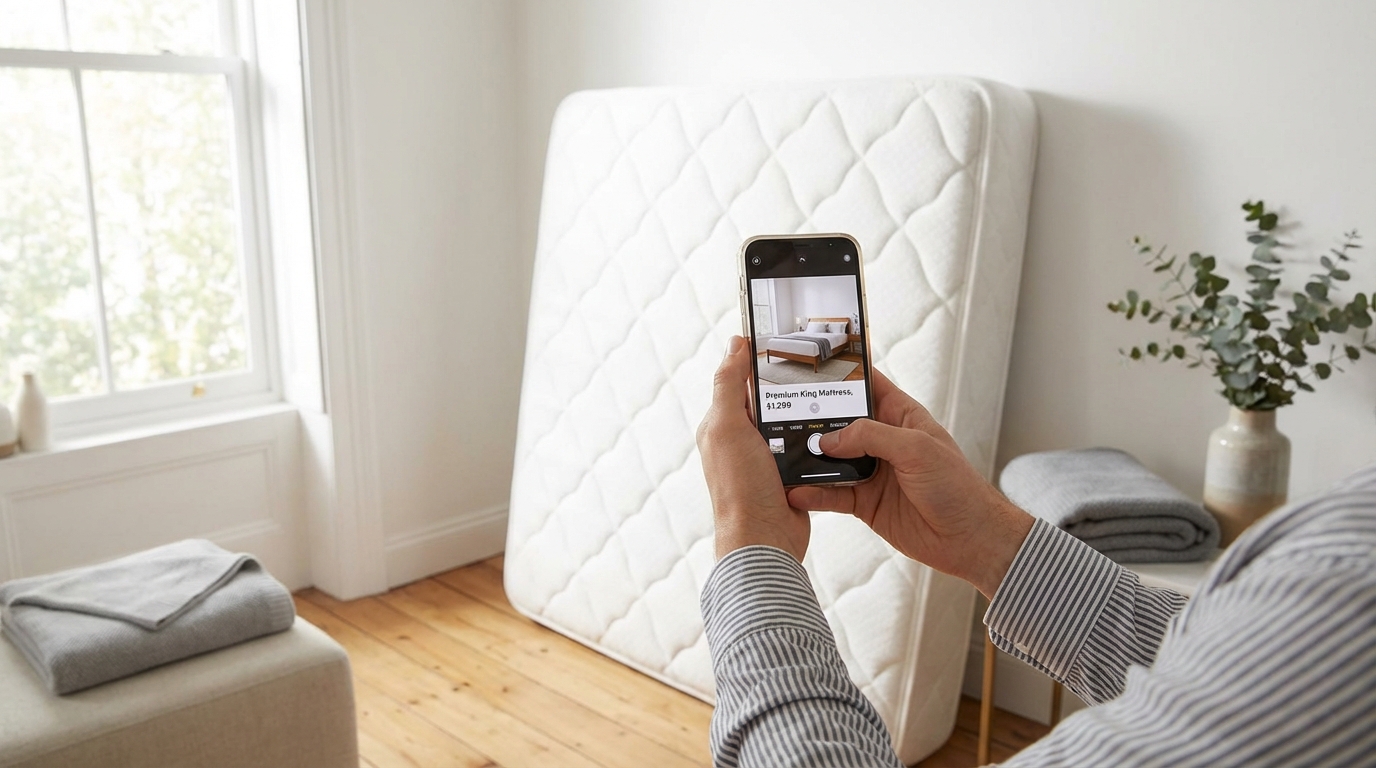
You've got a mattress you don't need anymore — maybe you upgraded, maybe you moved, or maybe it came from a trial return that's been sitting in your garage for three months. Either way, you'd rather put some cash in your pocket than drag it to the curb.
Selling a used mattress locally is absolutely doable. People buy used mattresses every day — often because a quality mattress at 30–60% off retail is a genuinely good deal. But there are some important things to know before you post that listing: which platforms actually work for mattress sales, how to price it right, how to present it, and the legal rules that vary from state to state.
This guide covers everything you need to know about selling a mattress near you — including how some people have turned local mattress resale into a legitimate side business.
Let's tackle the big question first: yes, it's legal to sell a used mattress in most states. But the rules vary significantly, and ignoring them can lead to fines.
Mattress resale is regulated at the state level, and the requirements usually fall into a few categories:
Sanitization requirements: Many states require that used mattresses be professionally sanitized before resale. This typically means steam cleaning, UV treatment, or chemical sanitization by a licensed facility.
Labeling laws: Most states require that used or refurbished mattresses carry a specific label indicating their condition. You've probably seen the "DO NOT REMOVE UNDER PENALTY OF LAW" tags on new mattresses — used mattresses have their own labeling requirements.
Licensing: Some states require a special license or permit to sell used mattresses commercially. This usually applies to businesses rather than individuals selling a single mattress.
| State/Region | Key Requirements |
|---|---|
| California | Sanitization certificate required; must be labeled "USED" |
| Texas | No statewide ban; must be sanitized and labeled |
| New York | Used mattress sales allowed; sanitization required |
| Florida | Must be sanitized and re-tagged; permit needed for dealers |
| Georgia | Must be fumigated and labeled with a red tag |
| Illinois | Sanitization required; must bear "secondhand" label |
| Ohio | Generally allowed; no specific sanitization statute |
| Oregon | No statewide restrictions; local rules may apply |
Important: This table is a general overview — always check your state's Department of Health or Consumer Protection website for current regulations. Laws change, and county or city-level ordinances may add additional requirements.
The practical reality for individuals: If you're selling your own mattress as a private party (not a business), enforcement is typically light. But meeting basic sanitization standards is still the right thing to do — for your buyer's health and for your own liability.
For a deeper look at what happens to mattresses in the resale ecosystem, check out our guide on what happens to returned mattresses.
Local marketplaces are your best bet for selling a mattress. Shipping a mattress is expensive and impractical, so this is inherently a local game. Here are the platforms that work best:
Best for: Reaching the widest local audience
Facebook Marketplace is the dominant platform for local mattress sales. The audience is massive, the listing process is simple, and buyers can message you directly. Mattresses sell well here because buyers can see your profile (which builds trust) and easily arrange local pickup.
Tips for success:
Best for: Mobile-first, younger buyer demographic
OfferUp has a strong user base in many metro areas and makes it easy to list and communicate on mobile. The app includes TruYou verification, which can help build buyer trust for higher-ticket items like mattresses.
Best for: No-frills, high-traffic listings
Craigslist is still a major player for used furniture and mattresses. It's particularly popular in smaller markets where Facebook Marketplace hasn't fully dominated. The interface is basic, but the traffic is real.
Safety tip: Always meet in a public place or have someone with you for the exchange. Craigslist transactions are anonymous by default.
Best for: Hyper-local, neighborhood-level sales
Nextdoor limits your audience to nearby neighbors, which is perfect for large items that are hard to transport. Buyers on Nextdoor tend to be more trusting (everyone is verified by address), and the community vibe works well for mattress sales.
Best for: Premium or specialty mattresses
If you're selling a high-end mattress (Tempur-Pedic, Sleep Number, etc.), eBay's "local pickup only" option can reach buyers willing to pay more for a premium brand. eBay's buyer protection adds a layer of trust that casual marketplaces lack.
Platforms like AptDeco and Kaiyo focus specifically on furniture resale and handle some of the logistics for you. They're selective about what they accept, but if your mattress qualifies, they handle pickup, delivery, and payment.
Pricing is where most sellers either leave money on the table or sit with an unsold mattress for weeks. Here's a framework:
Used mattresses in good condition typically sell for 30–60% of their original retail price, depending on:
| Mattress | Retail Price | Age | Condition | Suggested Asking Price |
|---|---|---|---|---|
| Casper Original (Queen) | $1,295 | 1 year | Excellent | $650–$780 |
| Purple Hybrid (Queen) | $1,799 | 2 years | Good | $720–$900 |
| Tempur-Pedic Adapt (King) | $2,499 | 3 years | Good | $750–$1,000 |
| Nectar Memory Foam (Full) | $699 | 1 year | Excellent | $350–$420 |
| Budget innerspring (Queen) | $350 | 2 years | Fair | $75–$125 |
The difference between a mattress that sells in two days and one that sits for two months often comes down to the listing quality.
Take photos in good lighting — natural daylight is ideal. Include:
Include these details in every listing:
Example listing:
> Casper Original Queen Mattress — 14 months old, excellent condition. Paid $1,295 new. Selling because we upgraded to a king. No stains, no sagging, smoke-free/pet-free home. Comes with original mattress protector (used since day one). Asking $650 OBO. Pickup in [neighborhood] — I can help load. Available weekends.
Selling large items to strangers requires some common-sense precautions:
Not every mattress is going to attract a buyer. If your listing has been up for two weeks with no serious inquiries, consider these alternatives:
Organizations like Habitat for Humanity, Salvation Army, and local shelters accept mattresses in good condition. You won't get paid, but you'll get a tax deduction and the satisfaction of helping someone. Sharetown is also a significant donor to Habitat for Humanity, routing unsold mattresses to people who need them.
Mattress recycling is becoming more widely available. Up to 90% of a mattress's materials — steel springs, foam, cotton batting, wood frames — can be recovered and repurposed. Our mattress recycling near me guide has a full breakdown of how to find recycling options in your area.
If selling and donating aren't options, a mattress pickup service can take it off your hands. Services range from free municipal collection to paid haulers — and eco-friendly options like Sharetown ensure it doesn't just end up in a landfill.
Here's something most people don't realize: there are people who sell used mattresses as a business — and they're making real money doing it.
Sharetown's network of independent contractor reps picks up returned and unwanted mattresses from major brands, cleans and refurbishes them, and resells them locally using the exact same platforms we discussed above — Facebook Marketplace, OfferUp, Craigslist, and more.
The difference is that Sharetown reps don't need to source their own inventory. Sharetown partners with DTC mattress brands to handle returns, and those returned mattresses become the rep's inventory. It's a supply chain in reverse — and it works.
If you're already comfortable selling on local marketplaces and want a reliable source of inventory, becoming a Sharetown rep could be a natural next step. Learn more at Sharetown's rep signup page.
For more context on the refurbished mattress market and what buyers can expect, check out our guide to refurbished mattresses.
Facebook Marketplace is the best overall platform for local mattress sales — it has the largest audience, direct messaging, and strong local search. OfferUp and Craigslist are also effective, especially in metro areas. For premium mattresses, eBay local pickup can reach buyers willing to pay more.
Used mattresses in good condition typically sell for 30–60% of their original retail price. A one-year-old Casper Queen ($1,295 retail) might sell for $650–$780. Pricing depends on brand, age, condition, and local market demand. Premium brands retain value better than budget options.
In most states, it's legal to sell a used mattress, but regulations vary. Many states require sanitization and specific labeling (a "used" or "secondhand" tag). Some states require commercial sellers to obtain a permit. Private party sales are generally less regulated, but meeting sanitization standards is still recommended.
Vacuum the entire surface thoroughly, then spot-clean any stains with an enzyme-based cleaner. Sprinkle baking soda over the surface, let it sit for 30 minutes, and vacuum again. For a deeper clean, use a handheld steam cleaner — the heat kills bacteria and dust mites. Let the mattress dry completely before listing it.
Yes — used mattress sales are common and growing. Many buyers are looking for premium brands at a discount, furnishing a guest room on a budget, or setting up a temporary living situation. A clean, well-maintained mattress from a reputable brand can sell quickly on local marketplaces.
In most cases, yes. Mattresses from trial returns are often in excellent condition since they've only been lightly used. However, check the terms of your trial agreement — some brands retain ownership of the mattress even after a return, while others allow the customer to keep or donate it. For a full explanation of the return process, see our guide on how mattress trials work.
Sharetown reps are independent contractors who pick up returned mattresses from Sharetown's brand partners, clean and refurbish them, and resell them locally. Revenue is split between the rep, Sharetown, and the brand. Reps set their own schedules, work in their local community, and benefit from a steady supply of inventory without having to source it themselves. Learn more at sharetown.com/earn-with-sharetown.