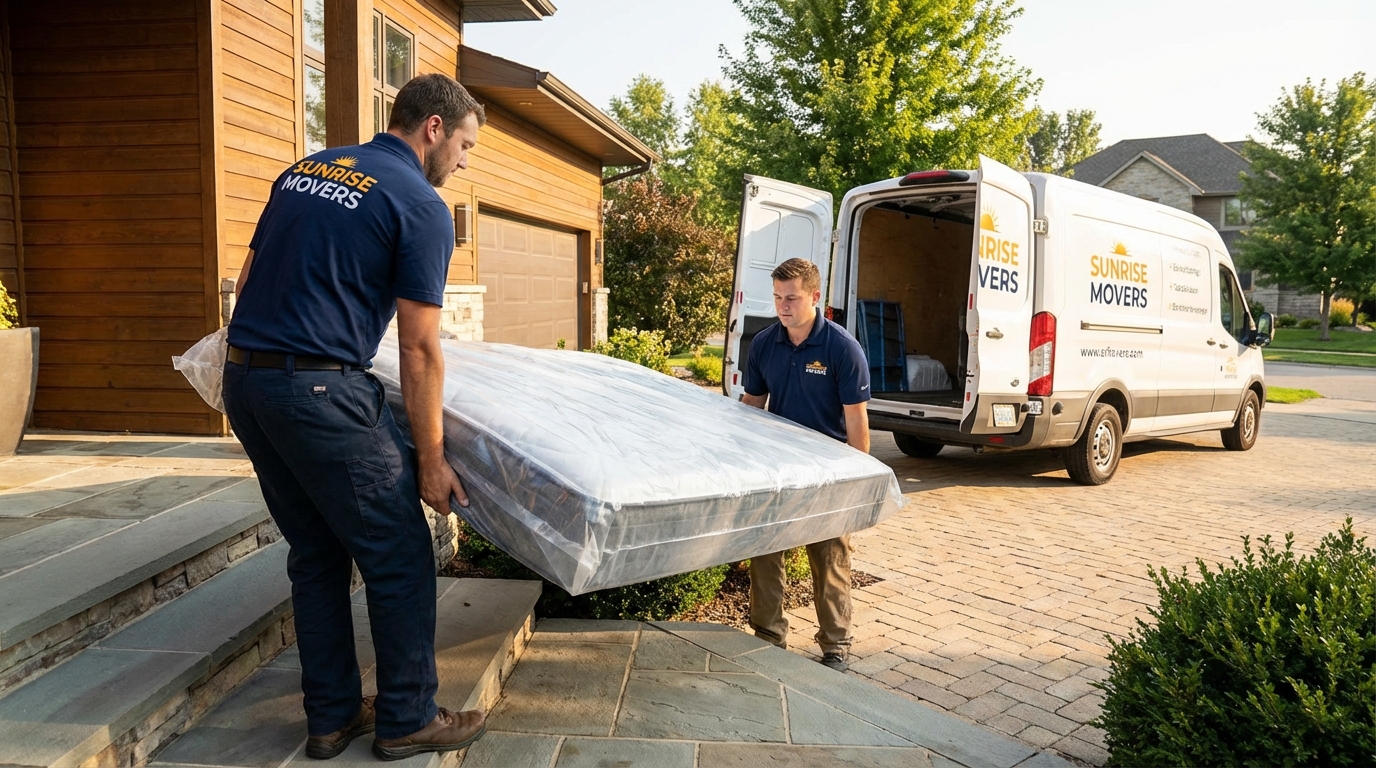
Getting rid of a mattress is one of those tasks that sounds simple until you actually try to do it. It won't fit in your car. The garbage truck won't take it. And leaning it against the dumpster with a "FREE" sign taped to it isn't exactly a plan.
The good news: there are more mattress pickup service options available today than ever before — from free municipal collection programs to on-demand haulers who'll carry it out of your bedroom and down three flights of stairs. The challenge is figuring out which option is the best fit for your budget, timeline, and conscience.
In this guide, we'll break down every type of mattress pickup service available, compare costs and convenience, and help you choose the right option. We'll also explain how services like Sharetown are changing the game by turning mattress removal into a sustainability win — keeping millions of mattresses out of landfills every year.
If you're weighing all your options, our complete guide on how to get rid of a mattress covers every disposal method in detail.
Mattresses are one of the most awkward items to dispose of. They're bulky, heavy (a king-size memory foam mattress can weigh over 100 pounds), and most standard waste collection services won't touch them. Meanwhile, roughly 20 million mattresses end up in U.S. landfills every year, where they take up enormous space and can take decades to decompose.
That's created a growing market for dedicated mattress pickup services. Whether it's a city-run bulk collection program, a nonprofit donation service, or a private hauling company, these services exist to solve a genuine logistical headache for homeowners and renters alike.
The options break down into a few main categories:
Let's look at each one in detail.
Most cities and counties offer some form of bulk item pickup for residents. This is usually the cheapest option — often free or just a small fee.
How it works:
Pros:
Cons:
Pro tip: Search "[your city] bulk waste pickup" to find your local program. Many cities have online scheduling tools that let you book a pickup in minutes.
If your mattress is in good condition — no major stains, tears, or structural damage — donating it is a great option. Several national organizations offer free pickup.
Common donation pickup services:
Condition requirements:
Pros:
Cons:
Buying a new mattress? Many retailers will haul away your old one at the time of delivery — sometimes for free, sometimes for a fee.
Retailers offering mattress removal:
Pros:
Cons:
Companies like 1-800-GOT-JUNK, College Hunks Hauling Junk, and LoadUp offer dedicated mattress pickup — usually with same-day or next-day availability.
Typical costs:
Pros:
Cons:
Apps like Dolly, GoShare, and Lugg connect you with independent haulers who'll pick up your mattress using their own vehicles.
Typical costs:
Pros:
Cons:
Here's the uncomfortable truth about most mattress pickup services: your mattress is probably going to a landfill.
According to the International Sleep Products Association, roughly 80% of discarded mattresses in the U.S. end up in landfills. That's despite the fact that up to 90% of a mattress's materials — steel springs, foam, cotton, wood — can be recycled or reused.
The problem is economic. Mattress recycling is labor-intensive. Dismantling a single mattress takes 10–15 minutes of manual work, and the recovered materials are often worth less than the cost of processing. As a result, most haulers and waste services choose the cheapest path: the dump.
This matters because mattresses are particularly bad landfill residents. They're bulky (taking up 20–40 cubic feet each), they resist compaction, and their metal springs can damage landfill equipment. A single mattress can occupy space in a landfill for 80 to 120 years.
For a deeper look at the environmental impact, see our breakdown of mattress waste statistics.
The good news is that a new model is emerging — one that treats discarded mattresses as valuable inventory rather than waste.
Sharetown takes a fundamentally different approach to mattress pickup. Instead of hauling mattresses to a landfill or recycling center, Sharetown dispatches local independent contractors — called reps — to pick up, clean, and resell mattresses in their local community.
Sharetown's approach achieves a 97% waste reduction rate compared to traditional mattress disposal. That's because the vast majority of mattresses picked up through their network are resold or donated — not dumped.
The hyper-local model also dramatically reduces transportation emissions. With an average of just 13 miles between the first customer and the second, there's no cross-country shipping or centralized warehouse system involved.
For consumers, the result is a mattress pickup service that's convenient, often more affordable than a private hauler, and genuinely sustainable — not just "green-washed."
Check out our detailed look at what happens to returned mattresses — including the surprising reality of how most brands handle the process.
With so many options, how do you pick the right one? Here's a quick decision framework:
No matter which service you choose, a few prep steps will make the process smoother:
| Service Type | Cost | Speed | Eco-Friendly? |
|---|---|---|---|
| Municipal bulk pickup | Free–$25 | 1–4 weeks | No (landfill) |
| Charity donation | Free | 1–2 weeks | Yes (reuse) |
| Retailer take-back | Free–$50 | At delivery | Varies |
| 1-800-GOT-JUNK | $75–$200 | Same day | Sometimes |
| On-demand hauler apps | $50–$120 | Same/next day | Usually not |
| Sharetown | Varies | Scheduled | Yes (97% diverted) |
Here's a twist on the mattress pickup story that most people don't know about: you can actually get paid to pick up mattresses.
Sharetown's network of independent contractor reps earn money by picking up mattresses and other large items, cleaning and refurbishing them, and reselling them locally. It's a flexible, entrepreneurial gig that combines elements of junk removal, furniture flipping, and e-commerce — all with a built-in supply of inventory.
Reps set their own schedules, work in their local area, and keep a portion of each resale. Many use it as a side hustle; others have turned it into a full-time business.
If you've got a truck or SUV and want to earn money while keeping mattresses out of landfills, visit Sharetown's rep signup page to learn more.
For a broader look at mattress recycling options and how the industry is evolving, check out our mattress recycling near me guide, or learn about the growing market for refurbished mattresses.
Yes — many cities offer free bulk waste pickup that includes mattresses. Charities like Salvation Army and Habitat for Humanity ReStore also offer free pickup for mattresses in good condition. However, free options typically have longer wait times and may send your mattress to a landfill.
Costs range from free (municipal or charity pickup) to $75–$200 for private junk removal services. Retailer take-back programs usually charge $0–$50 when you're buying a new mattress. Sustainability-focused services like Sharetown may offer competitive pricing depending on your area and mattress condition.
Yes. 1-800-GOT-JUNK offers mattress pickup as one of their core services. Expect to pay $75–$150 for a single mattress, with additional charges for box springs, extra items, or difficult access (e.g., fourth-floor walkup).
In many cities, you can schedule a bulk waste pickup and leave your mattress at the curb on the designated day. However, some areas have ordinances against leaving mattresses on the curb without a scheduled pickup, and you may face a fine. Always check your local regulations first.
The most eco-friendly option is using a service that resells or recycles the mattress rather than landfilling it. Sharetown achieves a 97% waste reduction rate by matching mattresses with local buyers. Mattress recycling centers can recover up to 90% of a mattress's materials, though availability is limited. Donation is also a strong option if your mattress is in good condition.
If your mattress was purchased from a brand that partners with Sharetown, the brand typically coordinates the pickup for you as part of their return process. You can also visit sharetown.com to learn more about pickup availability in your area and explore becoming a rep.
Yes — mattress recycling is possible and increasingly available. Up to 90% of a mattress's components (steel, foam, fabric, wood) can be recycled. However, dedicated mattress recycling facilities aren't available everywhere. For a full rundown of options, see our guide to mattress recycling near me.