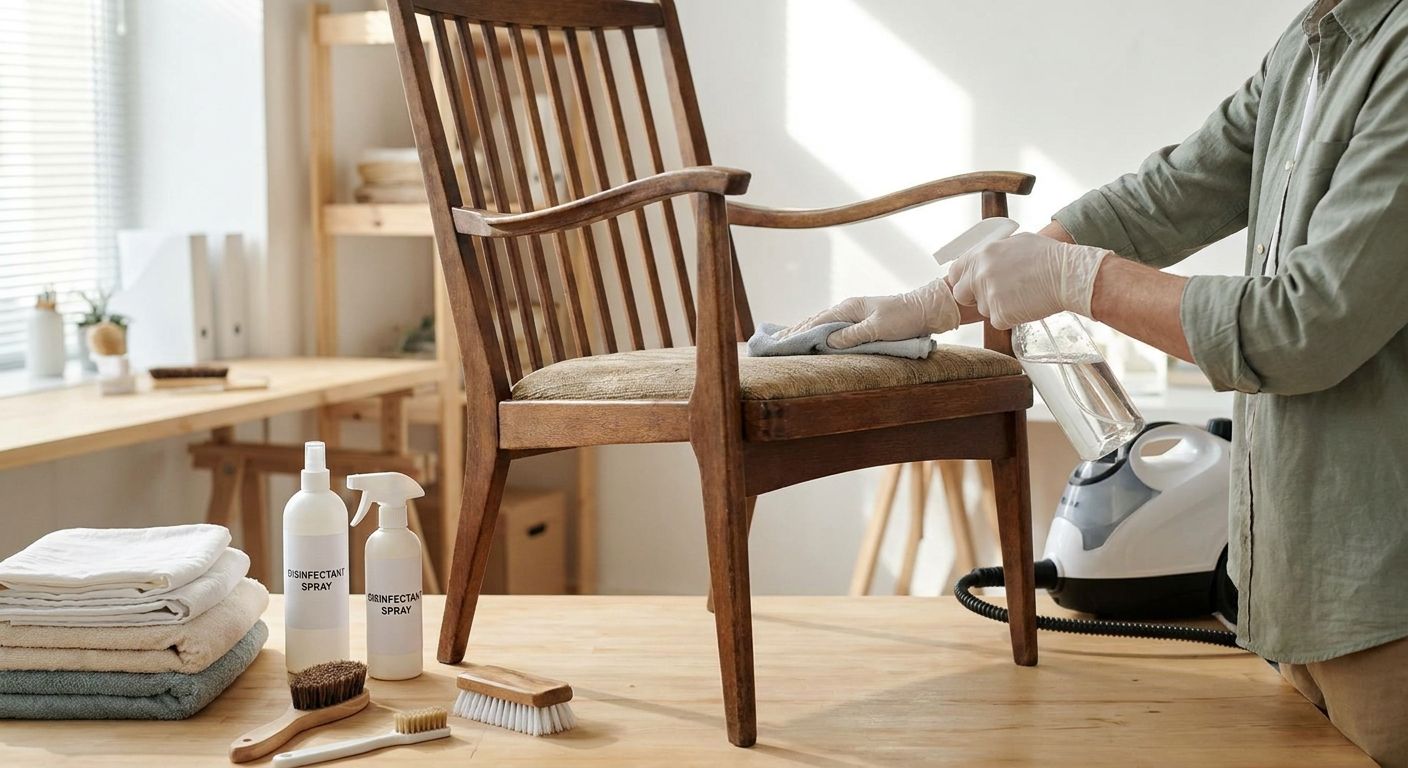
Disinfecting used furniture before reselling means three steps in order: vacuum and wipe away debris, apply an EPA List N disinfectant or 70% isopropyl alcohol to every hard surface for the full label dwell time (usually 1 to 10 minutes), then steam-treat any upholstery, cushions, or fabric seams at a temperature high enough to kill dust mites and bed bugs. Skip any one of the three and you're moving dirt around, not eliminating what lives in it. The step most resellers skip in 2026 is the underside and the joints, which is exactly where a buyer runs a hand before paying.
TL;DR
A used couch or dresser that still smells like the last owner's house doesn't sell. It sits. Buyers on Facebook Marketplace and OfferUp in 2026 ask about cleanliness before they ask about price, and a returned mattress or recliner that was never properly disinfected carries dust mites and bacteria straight into someone's living room. If you flip retailer returns for profit, disinfecting is the difference between a five-star review and a refund request.
Five steps, in this order, for any piece — wood dresser, fabric sectional, or metal bed frame:
Wood (dressers, tables)
Upholstered (sofas, chairs)
Metal and leather (frames, recliners)
Mattresses
Wood clears fastest because there's no fabric trapping bacteria. Wipe every flat surface, drawer interior, and handle with 70% isopropyl alcohol, then dry with a clean microfiber cloth to protect the finish. Verdict: run this on every wood piece — it's the cheapest, fastest step in the whole process.
Fabric holds odor, dander, and pests longer than any other material, so it needs steam, not a spray. Move the steamer slowly across seams, tufting, and the underside of cushions, where dust mites concentrate. Verdict: never skip steam on upholstery — a surface spray misses what's living inside the cushion.
Metal frames and leather recliners wipe down fast with an EPA List N product, but leather needs a conditioner pass after or the alcohol dries and cracks the surface. Verdict: disinfect leather the same day you condition it, not days apart.
Six factors decide whether a piece takes 15 minutes or an hour:
Yes. Furniture that looks clean still carries dust mites, bacteria, and pest eggs invisible to the eye. A visual check catches staining and structural damage but tells you nothing about what's embedded in fabric or wood grain. Run the same process on every piece: 15 to 45 minutes of work beats a refund and a bad review.
70% isopropyl alcohol kills most bacteria and viruses on hard surfaces within roughly 30 seconds of wet contact, but it never reaches pests deep in upholstery seams. Use alcohol on wood, metal, and leather. Use steam above 130F on anything with fabric or padding. Most working resellers in 2026 keep both in the truck.
Give any disinfected piece at least 24 hours in open air before photos. Damp cushions and lingering alcohol smell both surface in buyer questions and slow the sale. Heavy steam treatment in humid climates can need 48 hours. Dry piece first, then sharp photos — the order matters when you're writing listings that sell furniture fast.
Reps working with Sharetown pick up returned mattresses, furniture, and fitness equipment from premium retailers, then clean and sanitize each piece before reselling it locally. The disinfecting standard above is what keeps that resale value intact on day one.
Start flipping retailer returns
Pick up, sanitize, and resell bulky items locally for profit.
How do you disinfect a used couch before reselling it?
Vacuum the cushions and seams first, then steam every tufted area at 130F or higher to kill dust mites and bacteria. Let the couch air-dry at least 24 hours before you shoot listing photos.
What disinfectant works best on used furniture?
70% isopropyl alcohol kills most bacteria on hard surfaces within about 30 seconds of wet contact, and EPA List N products cover a wider range of pathogens at their label dwell time. Use alcohol on wood and metal, steam on fabric.
Is vinegar enough to disinfect secondhand furniture?
No. Vinegar cuts surface grime but is not registered as a disinfectant. Use it to wipe dust, then follow with 70% isopropyl alcohol or an EPA List N product for the actual disinfecting step.
How much does it cost to disinfect furniture before reselling?
A bottle of 70% isopropyl alcohol and a handheld steamer cover every furniture type and get reused across dozens of pieces, so the per-item cost drops to pennies once you own the tools.
Do you need to disinfect furniture with no visible stains?
Yes. Dust mites and bacteria live in fabric and wood grain regardless of visible staining. Run the same process on every piece whether it looks clean or not.
Can steam cleaning replace chemical disinfectants?
Steam above 130F kills dust mites and bed bugs on contact but does not replace an EPA List N wipe-down for bacteria on hard surfaces. Use both together for full coverage.
How long does furniture need to dry after disinfecting?
Most pieces need at least 24 hours of open-air drying before photos or delivery. Heavy steam treatment or high humidity can push that to 48 hours.
Should you tell buyers the item was disinfected?
Yes, state it plainly in the listing. Buyers ask about cleanliness before price, and naming your process removes the biggest objection before it comes up.
Joints and undersides — chair legs, sofa frames, dresser drawer tracks — collect more residue over a year than any visible surface, and almost no reseller flips a piece over before listing it. Turn every piece upside down for 60 seconds during disinfecting in 2026 and you'll catch the one spot buyers actually check before they hand over cash.