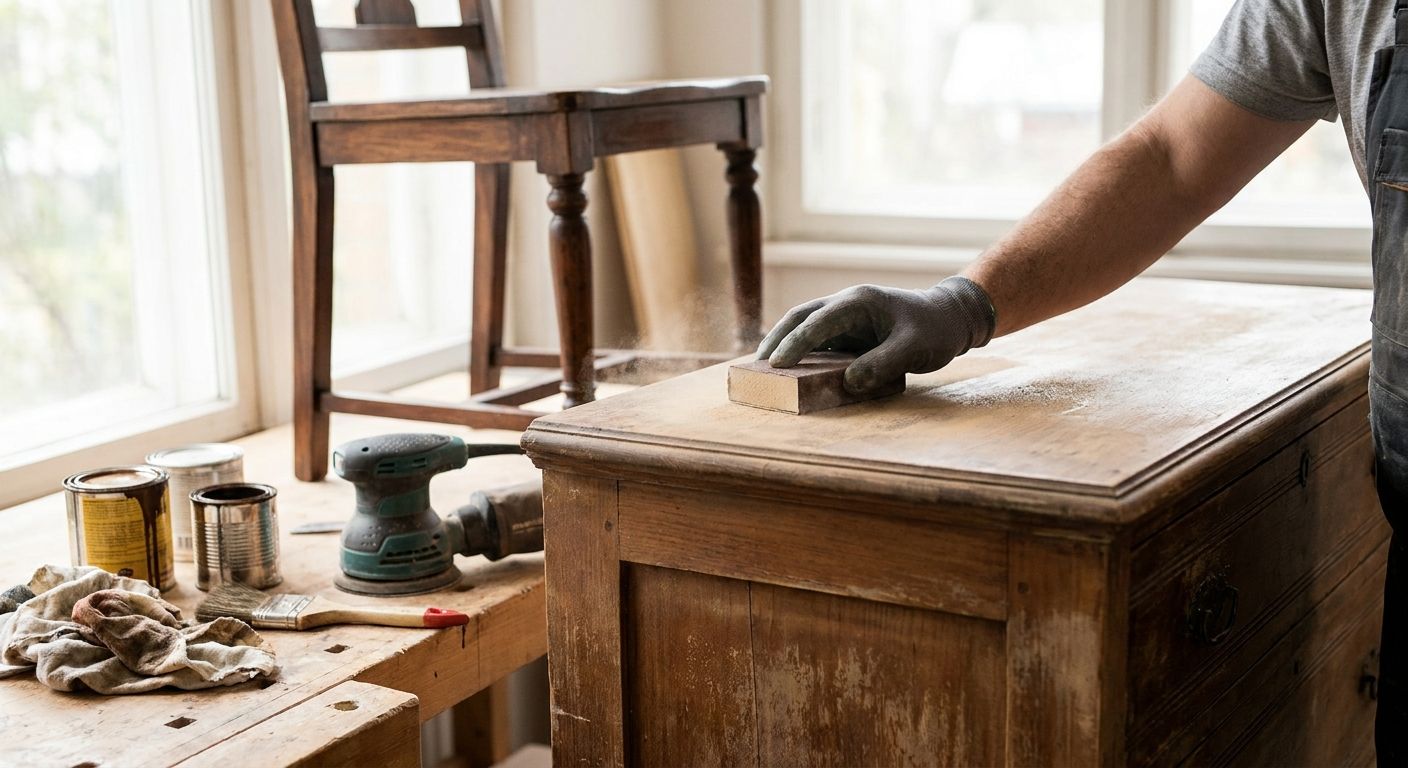
Sanding and refinishing a scuffed dresser, table, or headboard before you list it turns a reject into a piece buyers pay full price for. A light refresh (clean, scuff-sand, one topcoat) fixes surface scratches in an afternoon; deep gouges, water rings, or peeling lacquer need a full strip-and-refinish that runs a weekend and eats a few dollars in sandpaper and finish.
TL;DR
Retailers return furniture for dented corners, water rings, and cosmetic damage more often than structural failure. That damage is almost always fixable with sandpaper, stain, and a topcoat - and fixing it is the difference between a piece that sits in your listings for weeks and one that moves fast.
Anyone building a dresser and nightstand flip side hustle in 2026 needs a repeatable refinishing process, not a one-off Pinterest project. The steps below work the same whether you're touching up a $40 nightstand or a $300 dining table.
Refinishing wood furniture before reselling follows the same seven steps regardless of the piece: inspect, clean, sand, repair, stain or paint, seal, and cure.
A dedicated space makes this repeatable instead of a mess in your garage every weekend - see how to build a workshop for refurbishing furniture if you're flipping more than a piece or two a month.
Not every piece needs the same treatment. Matching the approach to the damage saves you time and keeps your margin intact.
Light refresh
Full strip-and-refinish
Paint over
Leave as-is
This is the move for a dresser with a dull finish and a few surface scratches but no structural or deep cosmetic damage. Clean it, scuff-sand at 220 grit to knock down the sheen and give the topcoat something to grip, then apply a single coat of wipe-on polyurethane or furniture wax. Best for reps flipping high volume where speed matters more than a full color change.
This is the move when the old finish is peeling, discolored, or you want to change the wood tone entirely. Strip the old finish with a chemical stripper matched to what's on the piece (lacquer strippers work differently than the strippers made for polyurethane), sand through the grit progression, stain, then seal with two coats. Best for solid wood pieces with real resale upside - not for veneer that can't handle heavy sanding.
Turn returned furniture into profit
Sharetown reps pick up, refinish, and resell retailer returns locally.
No two pieces take the same amount of work. A few factors decide whether you're looking at an afternoon or a full weekend:
You need to strip old finish before restaining whenever the existing topcoat is a different sheen or color family than what you're applying, or when it's peeling or alligatored. Sanding alone can work over a thin, intact finish, but stripping is the reliable move when you want a real color change.
Sanding and staining wins for solid wood pieces with resale value because buyers pay more for real wood grain than for painted furniture. Paint is the better call on laminate, particleboard, or mismatched pieces where sanding won't get you an even surface anyway.
Two coats of polyurethane is the standard before reselling refinished furniture - one coat looks thin and wears fast, three rarely adds enough durability to justify the extra dry time. Light sanding between coats with 320 grit gives the final coat a smoother finish.
How do you refinish wood furniture before reselling?
Refinishing wood furniture before reselling means cleaning, sanding through progressive grits, repairing gouges, staining or painting, and sealing with a topcoat. A light refresh handles surface damage in an afternoon; a full strip-and-refinish for deep damage takes a weekend.
What grit sandpaper should you use to refinish furniture for resale?
Start at 80 or 120 grit to strip old finish, move to 150, then finish at 220 before staining. Sand between topcoats at 320 grit for a smooth final surface.
Is it worth refinishing furniture before you resell it?
Yes for solid wood pieces with visible cosmetic damage - refinished furniture generally lists and photographs better than as-is pieces with scratches or water rings. It's not worth it on true antiques where original patina adds value.
How long does it take to refinish a dresser before selling?
A light refresh on a dresser takes an afternoon; a full strip-and-refinish with stain and two coats of polyurethane takes a full weekend including dry time between coats.
Can you refinish veneer furniture the same way as solid wood?
No - veneer can't handle the aggressive sanding a full strip-and-refinish requires because you risk sanding through to the substrate. Light scuff-sanding and a topcoat works better on veneer pieces.
Should you paint or stain furniture before reselling?
Stain solid wood pieces to preserve the grain buyers pay more for; paint laminate, particleboard, or mismatched pieces where stain won't take evenly. The wood underneath decides the answer, not preference.
What tools do you need to refinish furniture for resale?
A random orbital sander, sandpaper in 80 through 320 grit, wood filler, stain or paint, and polyurethane or wax cover most refinishing jobs. Chemical stripper is needed only for full strip-and-refinish work.
The piece that looks worst in the listing photo before you touch it is usually the fastest flip - buyers already expect wear on a scuffed dresser, so a clean sand and one topcoat over-delivers against their expectation. The pieces that look fine already are the ones where refinishing barely moves the price, so spend your sandpaper budget on the visibly rough stock first.