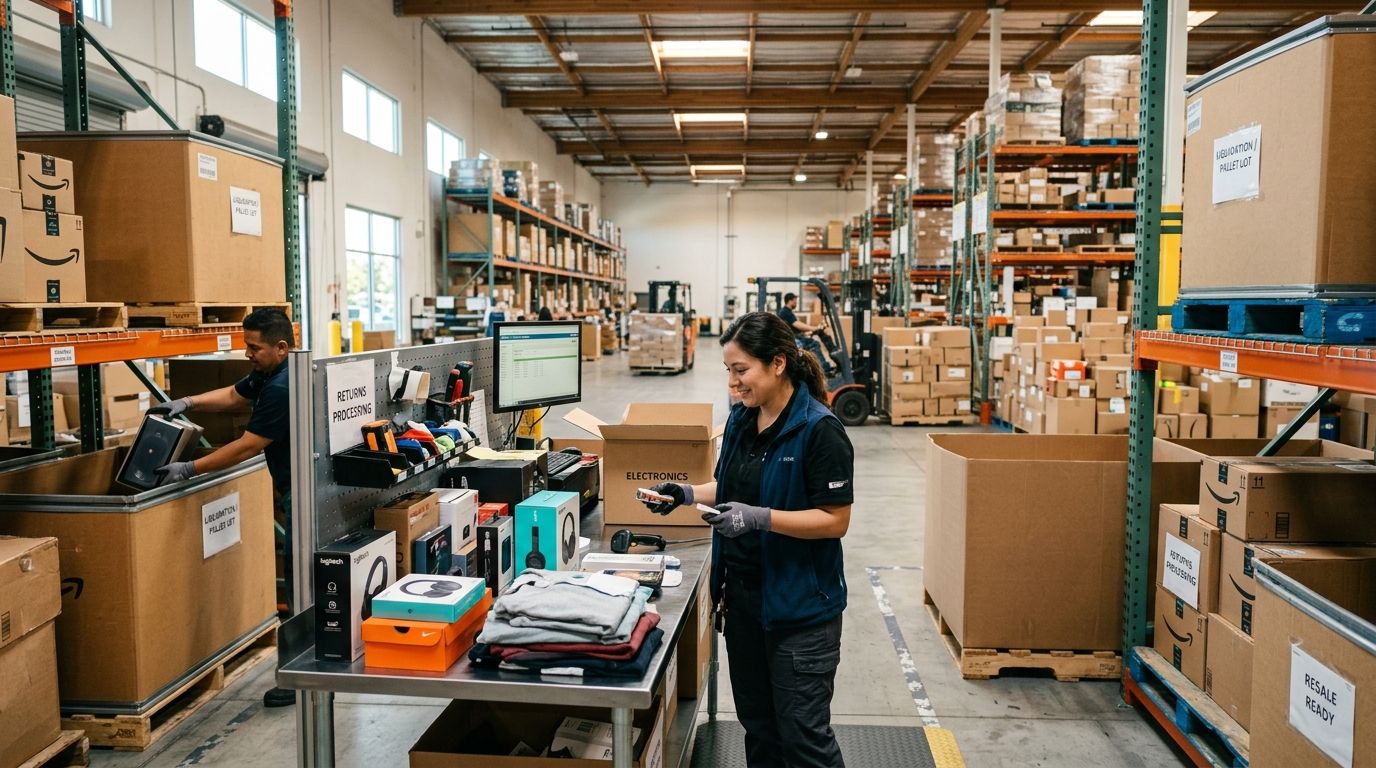
E-commerce brands sit on more returned inventory in 2026 than almost any other retail model, and returns liquidation for e-commerce brands means turning that inventory back into revenue instead of writing it off. Unlike a single-category mattress or furniture retailer, an e-commerce brand often ships everything from small parcels to oversized furniture and fitness gear, so one liquidation channel rarely fits the whole return stream. The brands that recover the most money split their returns by category and size before picking a resale path.
TL;DR
An e-commerce brand's return stream is a mixed bag by design: apparel comes back for fit, electronics come back for buyer's remorse, and bulky items like treadmills, sofas, and mattresses come back because they didn't fit the space or arrived damaged. Every one of those returns still has resale value, but the cost of handling them is not equal.
A small-parcel return ships back cheap. A queen mattress or a power rack does not, and freight on oversized reverse logistics can wipe out the entire resale margin before the item reaches a buyer.
That's why returns liquidation for e-commerce brands needs a segmented strategy, not a single vendor contract. Certain categories resell at a much higher rate than others, and brands that lump everything into one pallet program tend to under-recover on the exact items — mattresses, furniture, fitness equipment — that carry the most weight, literally and financially.
Before choosing a channel, know what's coming back and how much of it is bulky versus small-parcel.
Not every return is resalable as-is, and grading upfront prevents wasted freight on items that should go straight to salvage.
Most e-commerce brands need more than one channel, because no single option handles both a returned phone case and a returned recliner well.
Returns that resell under the brand's own name at rock-bottom prices on the same marketplaces as new inventory create a pricing problem nobody asked for.
Manual scheduling is the bottleneck that lets returned inventory age in a warehouse instead of turning into cash.
Recovery rate — dollars recovered against original retail value — tells you whether the program is working.
Some returns are damaged beyond resale, and a plan for those keeps disposal costs from eating the program's gains.
Liquidation pallet auctions
National liquidation marketplaces
In-house resale team
Local rep network (Sharetown model)
Recycling or salvage partner
Verdict: e-commerce brands with real volumes of bulky returns recover the most by pairing a national marketplace for small parcels with a local rep network like Sharetown for oversized items. Forcing both categories through one channel leaves money on the table either way.
Move bulky returns locally
See how Sharetown reps pick up and resell oversized returns near your fulfillment centers.
What does returns liquidation mean for an e-commerce brand?
Returns liquidation for e-commerce brands means sorting, grading, and reselling customer-returned inventory instead of scrapping it or dumping it at wholesale rates. Brands run it through pallet auctions, marketplaces, in-house teams, or local rep networks depending on the item.
How do e-commerce brands make money on returned inventory?
They recover value by reselling graded returns through the channel that fits the item best: small parcels through marketplaces, bulky items through local resale. The gap between recovery rate and handling cost decides whether the program is profitable.
Is it better to liquidate returns through pallets or a local resale network?
Pallet auctions suit high-volume small-parcel returns but pay wholesale rates. Local resale networks like Sharetown work better for bulky items such as mattresses and furniture, because long-distance freight on oversized goods often exceeds the resale margin.
What items should never go into a general liquidation pallet?
Oversized items with high freight cost relative to resale value, such as mattresses, sectionals, treadmills, and power racks. Freight charges on these can erase the entire margin before the item sells.
Should e-commerce brands separate bulky returns from small-parcel returns?
Yes. The two have different handling costs and different resale economics, so one shared channel usually under-recovers on one of them. Segmenting by size and category before choosing a channel is the biggest single lever on recovery.
Does returns liquidation hurt brand reputation?
It can, if returns resell under the brand's name at steep discounts on the same marketplaces as new inventory. Pricing floors and trademark restrictions protect retail pricing while still recovering value.
Can e-commerce brands recycle returns that cannot be resold?
Yes. Scrap-grade returns can go to recycling or salvage partners instead of landfill, which recovers no resale dollars but avoids disposal cost and supports sustainability reporting.
What is the fastest way to start a returns liquidation program in 2026?
Audit 90 days of return data by category and size, grade what is already in the warehouse, then assign bulky items to a local resale channel while small parcels go to an existing marketplace or pallet vendor.
The category most e-commerce brands under-price in their liquidation contracts is oversized furniture and fitness equipment, not electronics. A returned treadmill or sectional costs more to ship cross-country than it's worth once freight class and damage risk are counted, which is exactly why local pickup and resale beats a national pallet auction on that one category in 2026 — even when the pallet program wins on paper for everything else.